




How to Pack Smart for Any Trip: A Complete Travel Packing Checklist
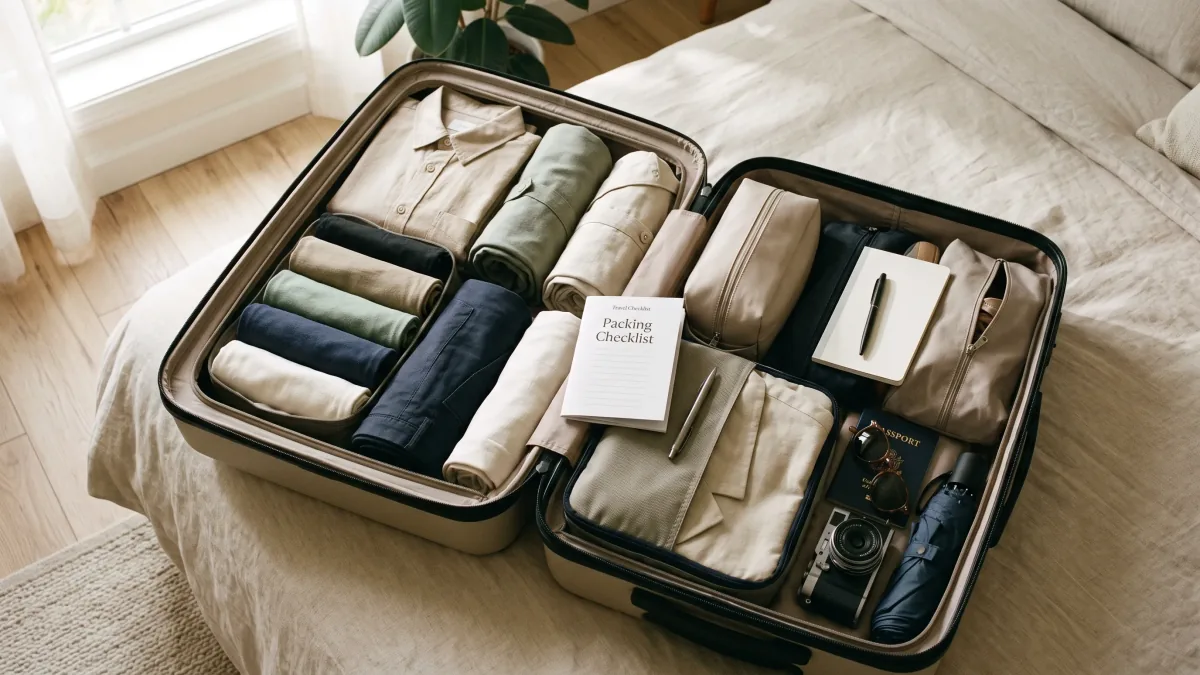
Smart packing is about bringing what you will genuinely need, keeping important items easy to reach, and preparing for the weather, activities, and rules that apply to your trip.
On this page28
- Quick Travel Packing Checklist
- 1. Start With the Destination and Itinerary
- 2. Essential Items for Most Trips
- Clothing and footwear
- Toiletries and personal care
- Travel documents and money
- Electronics and charging
- Medication and basic health essentials
- 3. What to Pack for Different Destinations
- 4. How Much Should You Pack for the Length of Your Trip?
- 5. Carry-On vs. Checked Luggage: What Goes Where?
- 6. How to Pack Lighter Without Forgetting Essentials
- 7. Common Packing Mistakes to Avoid
- 8. Printable-Style Master Travel Packing Checklist
- Documents and money
- Clothing and footwear
- Toiletries and personal care
- Electronics
- Health and comfort
- Before leaving home
- Frequently Asked Questions
- What should I pack first for a trip?
- How many outfits should I pack for a week?
- What should go in my carry-on bag?
- Can I bring liquids in my carry-on?
- How can I avoid overpacking?
- Should I keep medication in my checked bag?
- Conclusion: Make Your Checklist Match Your Trip
Smart packing is not about fitting everything you own into one suitcase. It is about bringing what you will genuinely need, keeping important items easy to reach, and preparing for the weather, activities, and rules that apply to your trip. This travel packing checklist gives you a practical starting point for weekend breaks, week-long holidays, business travel, and longer journeys.
Use the master list as a menu, not a rule that every traveler must follow. Your destination, health needs, access to laundry, mobility requirements, and planned activities should determine what goes in your bag.
Quick Travel Packing Checklist
Before you close your suitcase, check that you have considered these categories:
1. Start With the Destination and Itinerary
Before choosing clothes, answer five questions: Where are you going? What weather is expected? How many days will you be away? What activities are planned? Will you have access to laundry, shops, or other essentials?
Check the forecast close to departure and again if your plans or destination conditions change. Pack for the expected conditions rather than the season name alone: a coastal evening can be cool, and a warm destination may still have air-conditioned interiors or rainy days.
For international trips, verify passport validity, visa or electronic travel authorization requirements, local restrictions, and any required documents through official destination-government sources. Requirements vary by nationality and itinerary, so a checklist from another traveler may not apply to you.
2. Essential Items for Most Trips
Clothing and footwear
Choose clothing that matches the forecast and your activities. A useful baseline includes underwear and socks for the trip, tops and bottoms that can be mixed into several outfits, sleepwear and comfortable travel clothing, one extra layer when conditions may change, a waterproof outer layer or compact umbrella when rain is likely, and comfortable walking shoes.
Toiletries and personal care
Start with the products you use daily: toothbrush and toothpaste, deodorant, cleanser, moisturizer, hairbrush or comb, shaving supplies, and any period-care products. Add sunscreen, insect repellent, or other items according to local conditions and your needs.
For flights, check the screening rules at your departure and connecting airports before packing liquids, aerosols, gels, creams, or pastes in your cabin bag. Rules are jurisdiction-specific and differ between the U.S., EU, and other regions — follow the rules for your actual journey.
Travel documents and money
Electronics and charging
Medication and basic health essentials
Bring regular prescription medication in sufficient quantity for the itinerary, plus a reasonable contingency for delays. Keep it in its labeled packaging where possible, and carry prescription or medical documentation when it may be needed. Some medicines are restricted in certain countries even when legally prescribed at home — verify destination and transit rules in advance.
3. What to Pack for Different Destinations
| Trip type | Items worth considering | Packing reminder |
|---|---|---|
| Beach holiday | Swimwear, quick-drying cover-up, sandals, sun hat, sunglasses, sunscreen, water-resistant pouch | Plan for sun and possible wind; protect electronics from sand and water. |
| Cold-weather destination | Thermal base layers, warm socks, insulating mid-layer, coat, gloves, hat, weather-appropriate footwear | Layers are easier to adjust than one very bulky outfit. |
| Hot-weather destination | Breathable clothing, sun protection, comfortable sandals, light layer for indoor air-conditioning | Choose fabrics and cuts that suit the climate, local customs, and planned activities. |
| City break | Comfortable walking shoes, day bag, weather layer, compact umbrella if forecast suggests rain, evening outfit if needed | Prioritize walking comfort and versatile clothes. |
| Outdoor adventure | Activity-appropriate footwear, technical layers, waterproof protection, navigation or lighting equipment, reusable bottle | Follow the activity operator's equipment list. Do not substitute a generic checklist for specialist safety gear. |
4. How Much Should You Pack for the Length of Your Trip?
| Trip length | A practical starting approach |
|---|---|
| Weekend or 2–3 nights | One planned outfit per day, sleepwear, underwear and socks, one spare top if useful, essential toiletries, documents, medication, and chargers. |
| About one week | Build a small mix-and-match wardrobe, repeat suitable outer layers, pack enough essentials for the laundry plan, and include activity-specific clothing only where needed. |
| Longer stay | Plan laundry and replenishment. Pack versatile basics and a few special items, rather than automatically multiplying every item by the number of days. |
5. Carry-On vs. Checked Luggage: What Goes Where?
| Item | Usual packing approach | Important caveat |
|---|---|---|
| Passport, ID, money, travel documents | Personal item or carry-on | Keep them secure and accessible. |
| Essential medication and medical necessities | Carry-on when permitted | Check rules for controlled or temperature-sensitive medicines. |
| Phone, laptop, camera, valuables | Cabin bag when practical and permitted | Protect fragile devices and follow battery rules. |
| Spare lithium batteries and power banks | Carry-on under applicable FAA guidance | Capacity and airline restrictions may apply; confirm rules for your flight. |
| Clothing and non-fragile bulk items | Checked bag or carry-on | Choose based on dimensions, weight, allowance, and access needs. |
| Liquids, aerosols, gels, creams and pastes | Pack according to departure and transit security rules | Limits and exceptions differ by jurisdiction and item. |
| Restricted or hazardous items | Do not pack until you confirm whether and how they may be carried | Airline, aviation-security, customs, and destination rules can differ. |
6. How to Pack Lighter Without Forgetting Essentials
7. Common Packing Mistakes to Avoid
8. Printable-Style Master Travel Packing Checklist
Documents and money
Clothing and footwear
Toiletries and personal care
Electronics
Health and comfort
Before leaving home
Frequently Asked Questions
What should I pack first for a trip?
Start with items that are difficult to replace or essential for travel: passport or ID, required entry documents, medication, glasses or medical equipment, tickets, and payment methods. Then add trip-specific equipment, clothing, toiletries, and electronics.
How many outfits should I pack for a week?
There is no single correct number. Plan around your activities, climate, and laundry access. A small set of compatible tops and bottoms can create several combinations, while underwear and activity-specific clothing may require more careful planning.
What should go in my carry-on bag?
Keep essential documents, valuables, required medication, and items you may need during travel in your personal item or carry-on when permitted. Pack spare lithium batteries and power banks according to the applicable aviation rules, and check the airline's own requirements.
Can I bring liquids in my carry-on?
Usually yes, but limits depend on the security authority and airport. TSA's U.S. screening rule generally uses containers of 100 ml (3.4 oz) or less within a 1-liter bag. Check current rules for your departure and connecting airports because this is not a universal global rule.
How can I avoid overpacking?
Use the itinerary to create outfits, limit shoes, choose versatile layers, and remove items that have no clear use. Keep health, safety, accessibility, and weather needs rather than cutting essentials just to make the bag lighter.
Should I keep medication in my checked bag?
Keep essential medication accessible in your cabin bag when permitted, and check requirements for the medication and destination. Some countries restrict medicines that are legal elsewhere, so verify the rules before traveling.
Conclusion: Make Your Checklist Match Your Trip
The best travel packing checklist is one adapted to your destination, weather, trip length, activities, and personal needs. Start with documents, medication, and essentials; build a versatile clothing plan; then check the baggage and entry rules that actually apply to your itinerary.
Sources
Tags: Travel GuidesPacking TipsHow-To